
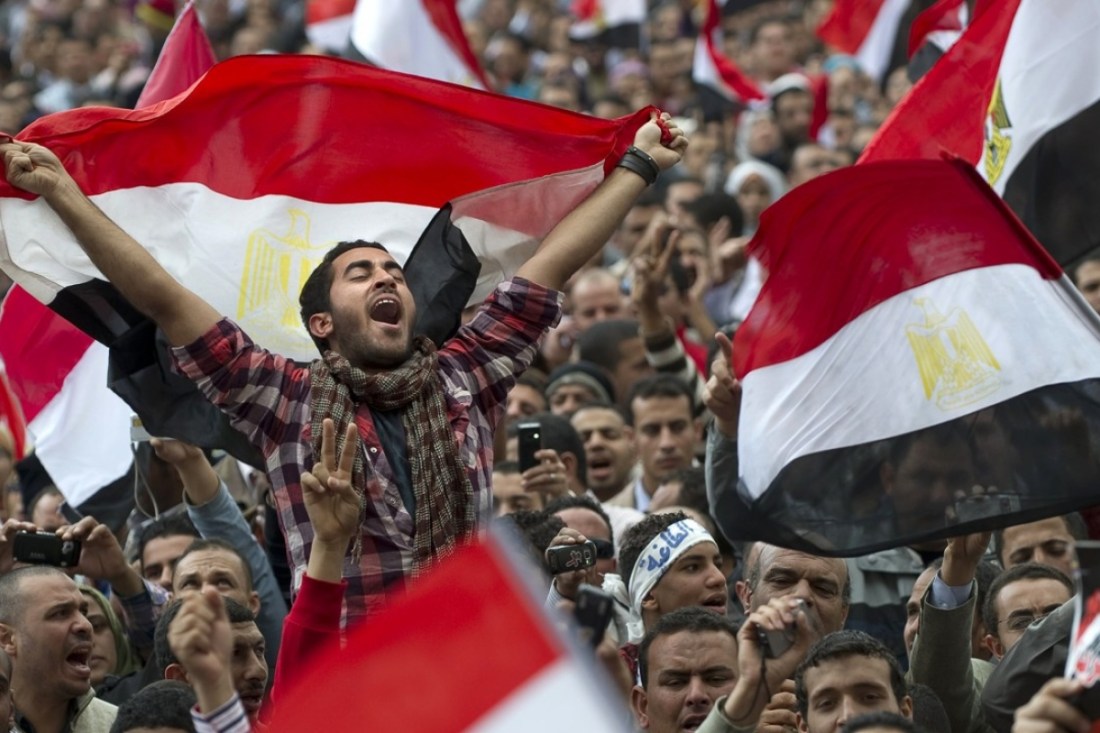
Am I an accountant by profession?… Am I a kind of revolutionary activist since 2011 Egypt’s revolution raise started amidst the Arab Spring protests? … Am I the mother of 3 who would aspire to pave the world for qualitative life to her children whether in their own home land or any other part of the globe? … Am I the international development practitioner who is working for one of the United Nations’ agency supporting in pushing the wheel of development across the world? … Am I the researcher for an answer and mitigation for the poverty and inequality issues in my MSc Programme at the University of Birmingham? …
While these questions run in my head every single day, until now I haven’t figured out what identifies me more than the other. Figuring out what identifies me more; resembles the nature of social sciences nature; and what one of my favorite professors in the MSc Programme once told me; that in social sciences it is not about acquiring a framed answer for the problematic existing issues but it is rather about how many valid reasonable questions you raise to tackle these issues. So at this stage I will keep the question raised and will pursue towards enhancing it instead of finding an answer.
Shifting careers from banking industry to the development arena 5 years ago; was neither planned for nor expected. As an expat in another country than my own I had the chance to be offered a position in one of the UN agencies. I think the reasons behind my decision to do this smooth swap between both careers beside working for an organization like the UN and the relatively decent salary!… 🙂 It rather came from two facts; firstly; it has been always “Politics” as a specialization that I was aspiring to pursue in my undergraduate studies and due to couple of reasons, this aspiration couldn’t turn into reality, secondly; as a native of a developing country (Egypt); “Development” for me is a word that my own country’s core progress efforts had been evolving around and still tied to.
A deep analysis of all types of aid Egypt has been benefitting from; would definably illustrate the coherent tight between “Development” and “Politics”. The variation between the key donors to Egypt across the past 70 years’ period would reflect not only on how politics plays a key role in development but on how developmental targets is interlinked with political endeavors’ and targets.
Although the name of my blog “Politica” can be recognized to someone who knows Italian as the direct translation for “Politics”, yet the hidden meaning that I am referring to; is not only “Politics”, but the usage of the word by the mob of the Egyptian common middle class when describing a manipulative attitude or behavior, which related greatly with an interesting definition of Politics and a useful distinction is “whether is it the rules of the game and the games within the rules”[1] .The usage of word “Politica” is common since the Egyptian slang until now is full of high usage of (English, French, Italian, Turkish, Greek) words and terminologies; as these nationalities were living and working in Egypt as expatriates before the 1952 Egyptian Revolution roused by the “Free Officers Movement”. Those expats had gradually left Egypt after Nasser came to power and the “1956 Tripartite Aggression” on Egypt in the Suez Crisis.
It would help to shed some highlights on how Egypt, presented in its successive governments; reacted to international aid so you would have a full picture on the volume of development efforts consumed on the ground. In my diving in Egypt’s ODA history, I will cover the era succeeded Nasser’s overriding the power up to date. Egypt has accepted and been involved in all different types of aid; for example, but not limited to; in the form of “Industrial Aid/Project Based Aid” from (Soviet Union), “Military Aid” from (USA), “Developmental Project-based Aid” from (UN agencies), “Allied Support Aid” OR “Voluntary Aid” from (number of countries, specifically the Gulf Stats) and “Tied Aid” from (World Bank Group subsidiaries’).
Net ODA received per capita (current US$) in Egypt was reported at 22.26 USD in 2016, according to the World Bank collection of development indicators, compiled from officially recognized sources.[2]
….to be continued
[1] Hewitt, Tom. (2019) “Development Politics Module Class”, University of Birmingham.
 Política